Estimated Reading Time: 7–8 minutes
Buying property in India as an NRI is completely legal — but documentation is where most NRIs face confusion, delays, and costly mistakes.
“Unlike resident Indians, NRIs must comply with FEMA regulations, banking norms, and identity verification rules.”
Missing or incorrect documents can delay registration, block payments, or even invalidate transactions.
This guide explains exactly what documents NRIs need, why they matter, and common pitfalls to avoid.
Who Is Considered an NRI for Property Purchase?
You are considered an NRI if:
- You live outside India for employment, business, or long-term residence
- You qualify as a Non-Resident under FEMA guidelines
NRIs are allowed to buy:
- Residential properties
- Commercial properties
NRIs cannot buy:
- Agricultural land
- Plantation property
- Farmhouses
(unless inherited or purchased with special approval)
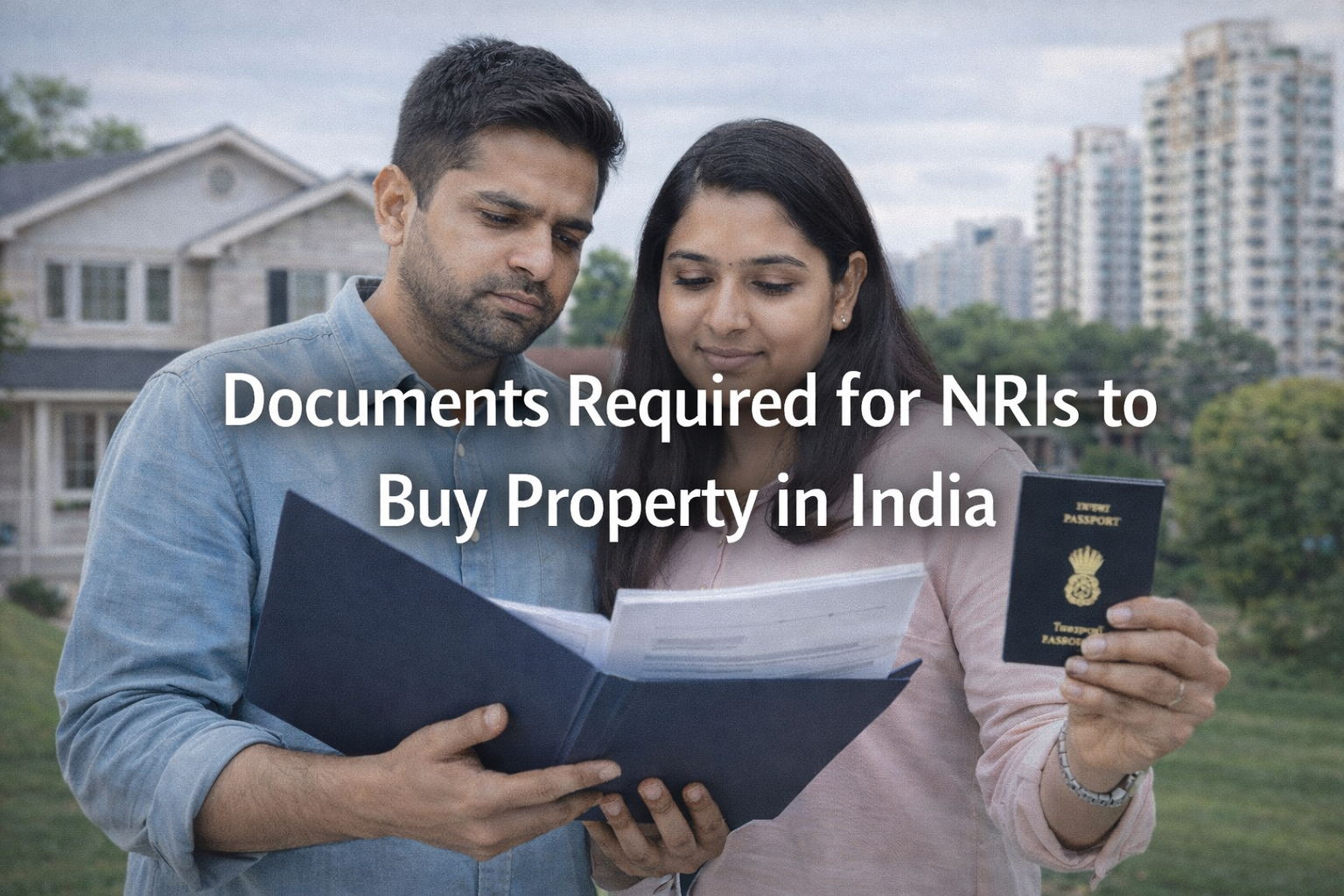
Passport (Primary Identity Proof)
Your passport is the most important document in the entire process.
Required pages:
- First page (personal details)
- Last page (address, if available)
- Visa or residency page
Important:
- Passport must be valid
- Name should match all other documents
Overseas Address Proof
This confirms your non-resident status.
Accepted documents usually include:
- Utility bill (electricity, water, gas)
- Bank statement
- Driving licence
- Residence permit
Tip:
The document should be recent and clearly show your overseas address.
PAN Card (Mandatory)
PAN is compulsory for:
- Property registration
- Tax compliance
- Capital gains in future
If you don’t have one, you must apply before purchasing property.
Indian Bank Account (NRE / NRO)
NRIs cannot use regular resident savings accounts.
You may need:
- NRE Account – for repatriable funds
- NRO Account – for income earned in India
Property payments must come from:
- NRE / NRO account
- Foreign inward remittance
Cash payments are not permitted.
Proof of Funds / Source of Money
Banks and authorities may require proof showing:
- Salary income
- Business income
- Savings or investments
This ensures FEMA compliance and avoids future repatriation issues.
Power of Attorney (If Buying Remotely)
If you are not physically present in India, a Power of Attorney (PoA) is commonly used.
Important points:
- Should be specific, not general
- Must clearly mention property transaction authority
- Must be notarised and/or attested as per local rules
Poorly drafted PoAs are a major risk for NRIs.
Photographs & Signatures
You may be asked for:
- Passport-size photographs
- Specimen signatures
These are used for:
- Registration
- Banking
- Legal documentation
Property-Related Documents (From Seller or Builder)
NRIs should personally verify:
- Title deed
- Sale agreement
- Approved plans
- Completion or occupancy certificate
Never assume documents are correct just because a builder or broker provides them.
Common Mistakes NRIs Make
- Using incorrect bank accounts
- Signing generic Power of Attorney documents
- Skipping legal verification
- Relying solely on relatives or brokers
- Not aligning documents with FEMA rules
Most problems surface years later — during resale or repatriation.
Frequently Asked Questions
Can NRIs buy property without coming to India?
Yes, through a properly drafted Power of Attorney.
Is Aadhaar mandatory for NRIs?
No. Aadhaar is not mandatory for property purchase by NRIs.
Can property be paid from a foreign account?
Yes, via inward remittance or NRE/NRO accounts.
Are documents different for resale and builder properties?
Core NRI documents remain the same, but property documents differ.
Final Thought
For NRIs, buying property in India is less about eligibility — and more about documentation discipline.
Clear and correct documents today prevent:
- Legal disputes
- Tax issues
- Repatriation problems later
Understanding what’s required puts you in control — even from thousands of miles away.